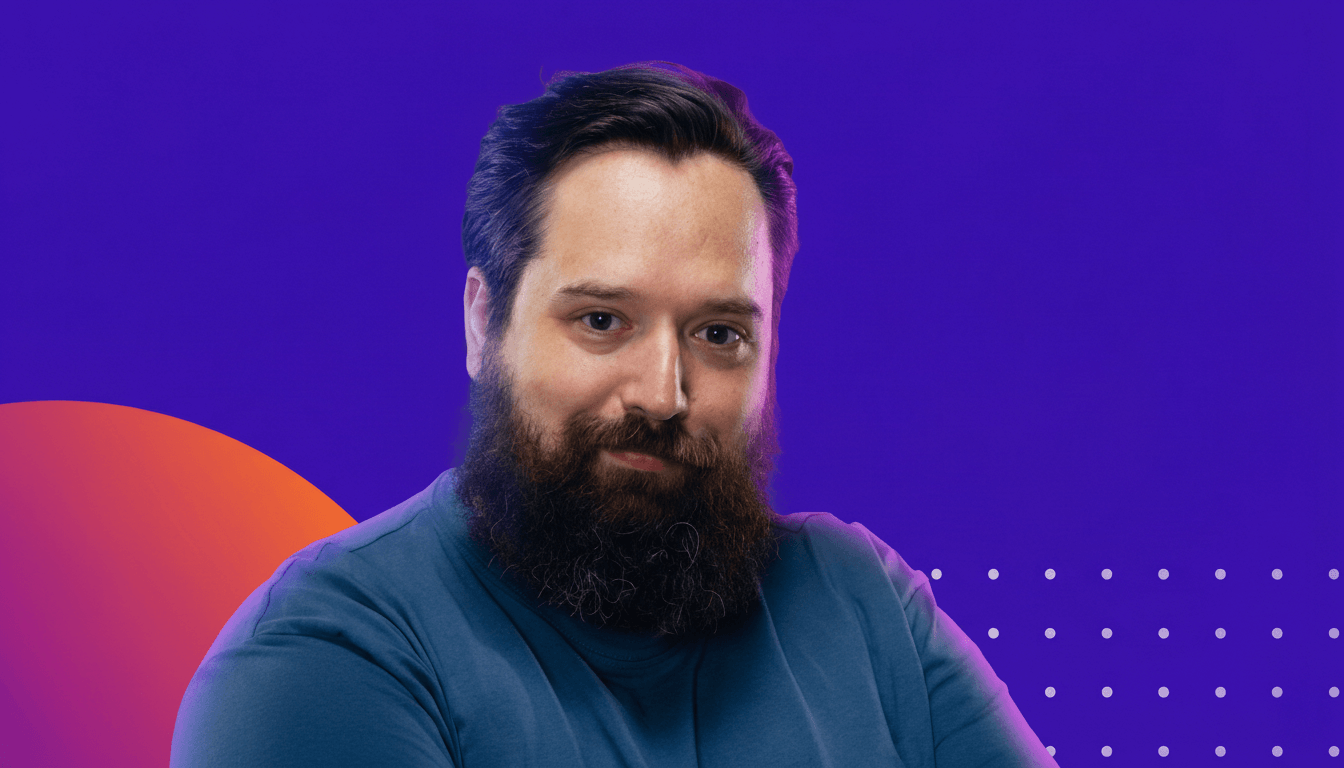
For eight years, Brais Revalderia was stuck.
He was trying to capture the soul of a 500-year-old tradition in Galicia, Spain — a raw, dangerous, and beautiful ceremony where villagers round up Europe’s last wild horses.
But his traditional camera lens kept hitting a wall.
He could show you what was happening, but he couldn't make you feel it. He couldn't make you feel the thunder of 300 horses charging toward you, or the deep, unspoken connection between the people and these animals.
He realized that to save this disappearing memory, he had to do more than just record it.
He had to build a bridge so people could walk into that world themselves.
Who They Are
Brais Revalderia is the Founder and Executive Producer of 100 Sutton Studios & Cinexin Studios, a creator dedicated to preserving cultural identity through immersive documentary filmmaking.
The Challenge
Traditional film couldn't capture the raw, spiritual connection of "Rapa das Bestas," a disappearing tradition with wild horses, leaving the true experience behind an invisible wall.
The Solution
Brais created "Fillos do Vento: A Rapa," a groundbreaking immersive documentary using 270-degree projection, binaural sound, and even scent to transport audiences directly into the heart of the action.
The Results
The project became an XR Awards Gala finalist, was the only immersive documentary selected for major international festivals like Cannes, and created a timeless, visceral record of a unique cultural event.
The Wall a Normal Camera Couldn't Break
In the mountains of Galicia, a tradition called "Rapa das Bestas" has endured for five centuries.
It’s a fight for identity, a testament to the bond between humans and nature.
"Fillos do Vento is a documentary that fights for the identity and the memory of the rural areas in Europe," explains Brais Revalderia. "And also it fights for the last wild horses in Europe that live in Galicia."
For nearly a decade, Brais tried to tell this story the conventional way.
"We started doing this project as a traditional documentary," he says. "We were shooting for more than eight years and there was a barrier, a wall that we couldn't pass shooting the regular way."
The problem wasn't the visuals. The problem was the feeling.
How do you explain a connection that’s been built over generations? How do you make someone in a city apartment understand what it’s like to live with nature 24/7?
A flat screen could show the action, but it couldn't transmit the soul of the event. The story was getting lost in translation.
Movies, Brais felt, were "not making the impact they were making a few years ago." He needed something more. He needed to tear down the wall between the audience and the experience.
Building a Bridge to a Disappearing World
If you can't describe the feeling, you have to let people experience it for themselves. That was the breakthrough.
Brais and his team at 100 Sutton Studios & Cinexin Studios decided to pivot from traditional film to immersive reality.
Their goal was simple but ambitious. As Brais puts it, "We wanted to be the bridge for people to actually get closer to the real experience."
This wasn't about just pointing a 360-degree camera. It was about recreating the sensory landscape of the Rapa.
They designed an experience with a 270-degree projection, enveloping binaural sound, and even scent. The goal was to remove the screen and put you right there in the mountains of Galicia.
Why go to such lengths? Because the stakes are incredibly high.
"This is a tradition that's been happening for 500 years that eventually might not exist, unfortunately," Brais warns. "This might be the only way to experience it."
The magnitude in terms of looking straight to a group of 300 horses coming towards you... when you watch that on a flat screen is not the same as having it in front of you.
— Brais Revalderia
Suddenly, the audience wasn't just watching. They could feel the ground shake. They could hear the calls of the villagers. They could almost smell the wildness in the air.
The immersive approach wasn't a gimmick. It was the only way to make the story resonate, to make people feel what was at risk of being lost forever.
"It Would Take Someone Else 10 Years to Get This Shot"
Creating that bridge was anything but easy.
The heart of the Rapa takes place in a stone enclosure called a "curro," where the villagers work with the horses. It’s chaotic, fast, and intensely dangerous.
Getting a camera in there, let alone the right kind of immersive camera rig, was a monumental challenge. It wasn't something you could just show up and do.
"If you get in there with a camera, you might not even be able to get a shot because it's really crazy how they do this super quick," Brais says. "And it's dangerous. You might get kicked by a horse or hit by them."
This is where the eight years of groundwork paid off.
The team had built trust. They understood the rhythms of the event and the behavior of the animals. They learned where to stand, when to move, and how to become invisible in the middle of the controlled chaos.
The Value of Access
"The content that we got, if somebody else goes there now to try to get it, it probably will take them again 10 years to be able to get on that because it's not easy."
This hard-won access is what makes the final product so powerful. It’s not a simulation. It’s reality, captured from a perspective no one has ever seen before.
A Real Story in a World of Digital Fiction
In the rapidly evolving world of XR, many experiences are digitally created fantasies. They are incredible feats of imagination and code, but they are born from a computer.
"Fillos do Vento" stands apart.
"What made our project special is that it is a real story," Brais states proudly. "Most of the projects right now in inverse XR and AR are digitally created fiction. Ours is a real story. It's something that it happened in front of the camera."
This authenticity gives the project a different kind of weight.
It’s not just an escape; it’s a connection. It's a portal to a real place, with real people, facing real challenges. And that connection inspires a deeper level of engagement.
The experience doesn't end when the credits roll.
"A lot of people, it's not only that you want to know more," Brais observes, "you might want to go and visit actually the place where you lived for 30 minutes in this experience."
From a Self-Funded Passion Project to the World Stage
For years, this project ran on little more than passion and belief. There were no big studio budgets or guaranteed distribution deals. It was a labor of love, funded from the creators' own pockets.
"It's hard to keep rolling for so long," Brais admits. "Because of course budgets are not unlimited. This is an independent project. We've been funding it out of our pocket."
There were countless moments when it would have been easier to stop. Moments of doubt, financial strain, and logistical nightmares. But they refused to quit.
His advice to other creators is simple and heartfelt: "I will say never give up, for sure. There were so many crucial moments where we decided we wanted to keep going, and it was worth it."
And it was.
The project that started as a self-funded dream began to gain international acclaim. It was selected for major festivals, including the prestigious Cannes Film Festival. In a world saturated with media about this tradition, "Fillos do Vento" broke through.
"Our project was the only one in all this time that actually made it to the biggest festivals," Brais notes.
This journey culminated in its recognition as a finalist at the XR Awards Gala, placing it among the best immersive experiences in the world.
Why Recognition Matters for Groundbreaking Work
For a project that defies easy categorization, awards and official selections are more than just trophies. They are validation.
They signal to the world that this new form of storytelling has power and legitimacy.
Brais points out a challenge in the industry: the need for better categorization within awards to help judges and audiences understand the nuances of different XR projects.
"There should be different categories to differentiate a video game from a project like mine, for example," he suggests.
Being an XR Awards finalist provided a platform that understood that distinction.
It recognized "Fillos do Vento" not as a game or a simple 360 video, but as a new frontier in documentary filmmaking. It celebrated the project for its artistic merit, technical innovation, and profound human story.
Your Story Deserves to Be Seen
The journey of "Fillos do Vento: A Rapa" is a powerful reminder that the most impactful stories often come from the most challenging places.
It took years of perseverance, a willingness to abandon old methods, and an unwavering belief in the power of a real story.
Brais and his team didn't just create an award-winning XR experience. They built a time capsule.
They preserved a piece of our shared human heritage in a way that will be felt, not just watched, for generations to come.
Your project could be next. If you are pushing boundaries, telling a story that needs to be felt, and creating a world that deserves to be experienced, your work belongs on the same stage.
Have a story that needs to be told?
Nominate your project for the XR Awards and share your vision with the world.
Register Interest